I'm a slow blogger these last couple of weeks, but as promised, here's the next entry about pacing and suspense, and some of the many ways I've noticed writers achieving excellence in both. Here's what I stated on today's topic:
Keep it moving. This should be pretty obvious. If scenes don't advance the plot, cut them. Whether it's commercial or literary, please don't spend a chapter in which nothing happens except the examination of a character outside the context of advancing the story. This is crucial to excellent pacing.
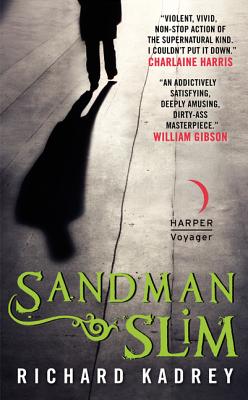
One of my favorite books in recent memory is Sandman Slim, by Richard Kadrey. The novel has no chapters, which kind of seduces you into immediately wanting to read it from cover to cover. It's this rambling, machine gun of a story. Of course, bookmarks are critical if you need to stop reading - say the house catches fire, or you need to bring a kid to practice. It's like a Quentin Tarantino homage to B movies. I am a huge fan of the Kill Bill series, so proceed at your own risk from here on out.
James Stark was a magician, but his jealous friends betrayed him, causing him to spend eleven years in hell as Azazel's slave and ultimately an assassin. That's back story. The novel starts with him having just escaped to a super-seedy Los Angeles. Did I mention he's pissed off? Stark hunts his betrayers across a demon-infested city of angels, all the while taking and dishing out completely over-the-top violence. All he wants is to take his revenge on his betrayers, and then die, leaving everything behind forever. As the novel progresses, he discovers there's something strange going on in L.A., and wouldn't you know it? He has to save the world in the end.
Sure, he comes off like one of those flawed super heroes--the Dark Knight only without the funding. However, we don't spend a whole lot of time analyzing Stark outside the context of advancing the above plot points. This is what he's about, it's what he wants, and so that's where we learn about him. Every bit of detail regarding the former assassin is revealed in the context of constant plot motion.
To quote my GoodReads review, this novel grabs you by the scruff of your neck from the start and yanks you straight through to the exhilarating end. Seriously. There is no good point to set the book down on your night table. The tension you feel as you read is relentless, but it's kind of a wave. There are moments where you get to breathe - just. And then bam, the car is off again, and you're hanging onto the rear bumper for dear life.
How can I best describe what the author has done regarding pacing? The story moves because important stuff is always happening. Even those quiet moments, of which there are few, seem essential to plot progression. It's a matter of perception, but in this world of Sandman Slim, what passes for a quiet moment is a bit unnatural. There are many two-way conversations with a severed head. Every last paragraph grabs your bottom lip and tugs hard. The pace is incredible, but not exhausting - quite a fine line, I might add.
Stark spends half of the book seeking vengeance--not plotting vengeance, mind you. He carries it out. So many books have a character plotting vengeance--usually the bad guy--for chapters on end while other theoretically interesting bits of stuff happen. Want people biting their nails to the nubs? Make vengeance acted-upon a constant presence. On top of that, bad guys are after Stark, and we don't have to watch them plotting either. They have some success, too, so Stark doesn't just get to go around grabbing a pound of flesh from every traitor he meets. The tension is there -- all the time. There is nothing else, nothing extra, nothing that seemed unimportant.
What novels have you read where the plot is in constant motion?
Showing posts with label tension. Show all posts
11/4/10
10/18/10
Pacing and Suspense
I was just reading an article on The Hunger Games in Entertainment Weekly -- this is my official source for all things pop culture, and by the way, Stephen King writes a column for it, so nanner-nanner-poo-poo. The overall topic was related to the movie adaptation. Lionsgate has the film rights and the scriptwriting process is well on its way. Nicole Sperling made this striking observation.
The books (which hide a compelling antiwar message behind the veneer of a tween thriller) are exceptionally well written and expertly paced, with near-constant suspense.
In particular, two phrases jumped off the page at me: "expertly paced" and "near constant suspense". I would certainly agree that in the first book, especially once they're in the arena, the suspense is nearly non-stop. The tension in the second book starts immediately because of President Snow, and then jumps through the roof when they're called back for the Quarter Quell. And if you haven't read Mockingjay, well, it's pretty much a non-stop ride on a runaway train. Nobody I know was able to put any of these books down without some form of dire threat.
So how do you manage expert pacing while keeping the reader in a near-constant state of suspense? This is tricky business because if your reader's heart is constantly pumping you run the risk of wearing them out. Here are some ideas, the basis of which require that your characters have excellent voice and are just plain interesting. You won't have much suspense if nobody cares about the people in the book.
Open with tension and suspense. Do you want to grab your readers' interest right away? The best writing lesson I ever had told me to begin the story when things change. What better way to change things for your characters than by sticking them in a stressful situation? Leave open questions, but not eight million of them.
Keep it moving. This should be pretty obvious. If scenes don't advance the plot, cut them. Whether it's commercial or literary, please don't spend a chapter in which nothing happens except the examination of a character outside the context of advancing the story. This is crucial to excellent pacing.
Every chapter needs a little tension. That's right. Every single chapter you write should have a little edge to it, except perhaps the epilogue. I'm going to mention this again later, but tension levels should read like a healthy EKG. Great big pulsating scenes followed my moments of quiet. There's nothing wrong with quiet moments, but they can never flat-line, or your patient's dead. All can seem well, but it's always good to have an undercurrent of some emotion, such as fear or hatred. Let it simmer and occasionally boil over a bit.
Cliffhangers. Often, you think of a cliffhanger in terms of the "To Be Continued" byline at the end of a book, movie or television show. Here's the challenge. Think smaller. Conclude your chapters with a cliffhanger. Clearly, you can't end every chapter that way, nor do I think you ought to. Sometimes, it's nice to end a chapter on a positive note, giving the reader some amount of closure on one particular issue. However, cliffhangers are critically important to adding suspense, especially early on when you are still trying to bait your readers (yes, they are fish, and you are trying to land them). These suckers are so important to getting your readers to turn the page rather than setting the book back down and either going to bed, or coming home from the book store or library empty-handed.
Tension in bunches. They say life's challenges occur in multiples. Stress can happen to your characters three chapters in a row. Three stressful situations can happen to your characters in one chapter. Or, if you want to go for the trifecta, beat your characters about the head by having three stressful situations occur per chapter, three chapters in a row.
Give 'em a break. Everyone needs to take a breath. Your characters. Your readers. After a solid week of battling evil creatures with mixed results, everyone's sitting around the campfire with their age appropriate beverage of choice. Take advantage of that time. Spill a little back-story. Add some emotion. But make it interesting. Let it serve a purpose. But don't forget a teaspoon of tension. Let it be ever present. I'm also a big fan of ending one of those scenes with a major disruption. It's a great way to let the reader know that they've had a moment to catch their breath, but they better saddle up once more.
Take everything away from your protagonist(s). This works if your main character is a protagonist that appeals to your readers. Take away what they love. Leave them with nothing. Make their lives as wretched as possible. Why? Suspense. Huh? If your protagonist resonates with your readers, they're going to want to see what happens. Will Katniss overcome and survive the Hunger Games? Against all odds, will she save Peeta too?
Mix up your sentence lengths. This is such a nit, but it makes a difference to how your story reads. If every sentence is about seventeen words, joined together with a conjunction, then your reader will start to nod off. If every sentence is about six words, your reader will become irritable. Mix it up. Break up your longer sentences with the occasional short one to make a point. The short ones have a greater impact that way.
Place foot on neck, don't remove. a.k.a. Climax. This is the EKG where the patient is undergoing a stress test. They're jogging on a tread mill, working like hell to keep up. I like big, multi facted, multi-chapter climaxes. The tension should be high. The resolution shouldn't be easy. You need more than one mountain to climb. Once your characters reach the zenith of one mountain, they should discover that there's another bigger one, this time with irritated and generally peckish cannibals waiting halfway up. Even better, they should discover that one among them is a spy for the evil king of the irritated and generally peckish cannibals, and has been leading them to their slaughter since day one. Finally, once they get past those guys, it might be a good time for an asteroid to burst through the atmosphere and set fire to everything. By the way, this is a great time to think in terms of plot twists or the big reveal. Hence, the spy.
Satisfying Resolution. Don't cheat your readers. How you resolve everything--if you resolve everything--needs to make sense in the context of your book. If the reader says, "Sorry, I'm just not buying that." You've missed something. You don't want them feeling like Clark Griswold arriving at Wally World to find it's closed. Do you want to be taken on a roller coaster at gunpoint?
And there you have it: my recipe for pacing and suspense. I could have sworn there were like eighteen more concepts I wanted to raise, but they were probably boring and didn't advance my point.
The books (which hide a compelling antiwar message behind the veneer of a tween thriller) are exceptionally well written and expertly paced, with near-constant suspense.
In particular, two phrases jumped off the page at me: "expertly paced" and "near constant suspense". I would certainly agree that in the first book, especially once they're in the arena, the suspense is nearly non-stop. The tension in the second book starts immediately because of President Snow, and then jumps through the roof when they're called back for the Quarter Quell. And if you haven't read Mockingjay, well, it's pretty much a non-stop ride on a runaway train. Nobody I know was able to put any of these books down without some form of dire threat.
So how do you manage expert pacing while keeping the reader in a near-constant state of suspense? This is tricky business because if your reader's heart is constantly pumping you run the risk of wearing them out. Here are some ideas, the basis of which require that your characters have excellent voice and are just plain interesting. You won't have much suspense if nobody cares about the people in the book.
Open with tension and suspense. Do you want to grab your readers' interest right away? The best writing lesson I ever had told me to begin the story when things change. What better way to change things for your characters than by sticking them in a stressful situation? Leave open questions, but not eight million of them.
Keep it moving. This should be pretty obvious. If scenes don't advance the plot, cut them. Whether it's commercial or literary, please don't spend a chapter in which nothing happens except the examination of a character outside the context of advancing the story. This is crucial to excellent pacing.
Every chapter needs a little tension. That's right. Every single chapter you write should have a little edge to it, except perhaps the epilogue. I'm going to mention this again later, but tension levels should read like a healthy EKG. Great big pulsating scenes followed my moments of quiet. There's nothing wrong with quiet moments, but they can never flat-line, or your patient's dead. All can seem well, but it's always good to have an undercurrent of some emotion, such as fear or hatred. Let it simmer and occasionally boil over a bit.Cliffhangers. Often, you think of a cliffhanger in terms of the "To Be Continued" byline at the end of a book, movie or television show. Here's the challenge. Think smaller. Conclude your chapters with a cliffhanger. Clearly, you can't end every chapter that way, nor do I think you ought to. Sometimes, it's nice to end a chapter on a positive note, giving the reader some amount of closure on one particular issue. However, cliffhangers are critically important to adding suspense, especially early on when you are still trying to bait your readers (yes, they are fish, and you are trying to land them). These suckers are so important to getting your readers to turn the page rather than setting the book back down and either going to bed, or coming home from the book store or library empty-handed.
Tension in bunches. They say life's challenges occur in multiples. Stress can happen to your characters three chapters in a row. Three stressful situations can happen to your characters in one chapter. Or, if you want to go for the trifecta, beat your characters about the head by having three stressful situations occur per chapter, three chapters in a row.
Give 'em a break. Everyone needs to take a breath. Your characters. Your readers. After a solid week of battling evil creatures with mixed results, everyone's sitting around the campfire with their age appropriate beverage of choice. Take advantage of that time. Spill a little back-story. Add some emotion. But make it interesting. Let it serve a purpose. But don't forget a teaspoon of tension. Let it be ever present. I'm also a big fan of ending one of those scenes with a major disruption. It's a great way to let the reader know that they've had a moment to catch their breath, but they better saddle up once more.
Take everything away from your protagonist(s). This works if your main character is a protagonist that appeals to your readers. Take away what they love. Leave them with nothing. Make their lives as wretched as possible. Why? Suspense. Huh? If your protagonist resonates with your readers, they're going to want to see what happens. Will Katniss overcome and survive the Hunger Games? Against all odds, will she save Peeta too?
Mix up your sentence lengths. This is such a nit, but it makes a difference to how your story reads. If every sentence is about seventeen words, joined together with a conjunction, then your reader will start to nod off. If every sentence is about six words, your reader will become irritable. Mix it up. Break up your longer sentences with the occasional short one to make a point. The short ones have a greater impact that way.
Place foot on neck, don't remove. a.k.a. Climax. This is the EKG where the patient is undergoing a stress test. They're jogging on a tread mill, working like hell to keep up. I like big, multi facted, multi-chapter climaxes. The tension should be high. The resolution shouldn't be easy. You need more than one mountain to climb. Once your characters reach the zenith of one mountain, they should discover that there's another bigger one, this time with irritated and generally peckish cannibals waiting halfway up. Even better, they should discover that one among them is a spy for the evil king of the irritated and generally peckish cannibals, and has been leading them to their slaughter since day one. Finally, once they get past those guys, it might be a good time for an asteroid to burst through the atmosphere and set fire to everything. By the way, this is a great time to think in terms of plot twists or the big reveal. Hence, the spy.
Satisfying Resolution. Don't cheat your readers. How you resolve everything--if you resolve everything--needs to make sense in the context of your book. If the reader says, "Sorry, I'm just not buying that." You've missed something. You don't want them feeling like Clark Griswold arriving at Wally World to find it's closed. Do you want to be taken on a roller coaster at gunpoint?
And there you have it: my recipe for pacing and suspense. I could have sworn there were like eighteen more concepts I wanted to raise, but they were probably boring and didn't advance my point.
3/25/10
Birth of a Novel Part 14 - Dialog, Answers & Tension
This is the nineteenth entry in my Birth of a Novel series of posts, where I talk about the development of my new YA urban fantasy. Yes, nineteenth, even though the post is entitled Part 14.
Have you ever begun a chapter and stalled? I did. I just sort of wrote some, then got stuck, then wrote a little more, then got stuck again. It was like driving my late 1978 Ford Fiesta, which by the way, was my first car. 800 bucks and a total piece of crap, but it moved.
I digress.
But then all of a sudden, last Sunday, I just had a massive spurt of productivity, and the chapter launched itself from my imagination onto the page. It was, as Peter Griffin often says, friggin' sweet. The chapter is a whole lot of dialog between Zydeco and Octavio, with our young griffin feeling a bit hostile to the old cockatrice.
It all sounds great when you write it, you know? But this involves a lot of dialog, and very little action. As I alluded to in my previous post, I'm most comfy and cozy writing dialog, especially if I know where it's going. The trick is to make sure it moves at the same time. Given that Octavio answers many of Zydeco's (and the readers') questions, it might help keep people's interest. Also, there's emotion and some level of tension.
Here's a snippet of Octavio monologue.
He strode in front of me and leaned in. “It’s important, Zydeco, because you are now human.” He waved a hand as I was about to protest. “You are human now. A mythos, yes, but human. You will continue to keep some of the griffin skills, if you continue to use them. I’ve seen your strength. You should be able to hear quite well, and your sense of smell … well, living in the city, you may want to avoid that particular … never mind. My point is, to survive and indeed thrive as a human, you must forget your past life. Those that have acclimated best are the ones who’ve given up dreams of the past. You want to be stronger than everyone else? You want to eavesdrop or use your super smelling power, or whatever it is you griffins have? Go right ahead. Although, some might consider those things a bit rude.”
Speaking of tension, a few chapters ago, I introduced a "timer", meaning that things have to be resolved by a certain time, one way or another. The classic, "Bring me the ransom by noon, or the hostage dies!" I decided that the timer I'd introduced had too much time on it. Malice set it for 3pm the following day. For a variety of reasons, plot-related and otherwise, I've pulled the timer back in to midnight. This should also raise the tension a few notches. I've received some feedback lately that the tension level in the story has gone down some, and while I'm going to fix that up in my revisions, I wanted to address it going forward as well.
I'm a big fan of Donald Maass' approach to building tension. I love his comments from The Fire in Fiction about micro-tension. He states that what keeps your readers noses rammed right into the book margin (my words, not his), is the constant worry about what will happen in the next few seconds of the book, not what will happen through the rest of the story. And that's micro-tension.
I want my readers on the edge of their seat during this chapter. While they read this dialog, I want it so engaging that they can't wait to hear what the next person will say.
How do you build tension?
To read about the last chapter, journey back to the previous entry.
The next post can be found by taking a zip line across the tree line to this spot.
Have you ever begun a chapter and stalled? I did. I just sort of wrote some, then got stuck, then wrote a little more, then got stuck again. It was like driving my late 1978 Ford Fiesta, which by the way, was my first car. 800 bucks and a total piece of crap, but it moved.
I digress.
But then all of a sudden, last Sunday, I just had a massive spurt of productivity, and the chapter launched itself from my imagination onto the page. It was, as Peter Griffin often says, friggin' sweet. The chapter is a whole lot of dialog between Zydeco and Octavio, with our young griffin feeling a bit hostile to the old cockatrice.
It all sounds great when you write it, you know? But this involves a lot of dialog, and very little action. As I alluded to in my previous post, I'm most comfy and cozy writing dialog, especially if I know where it's going. The trick is to make sure it moves at the same time. Given that Octavio answers many of Zydeco's (and the readers') questions, it might help keep people's interest. Also, there's emotion and some level of tension.
Here's a snippet of Octavio monologue.
He strode in front of me and leaned in. “It’s important, Zydeco, because you are now human.” He waved a hand as I was about to protest. “You are human now. A mythos, yes, but human. You will continue to keep some of the griffin skills, if you continue to use them. I’ve seen your strength. You should be able to hear quite well, and your sense of smell … well, living in the city, you may want to avoid that particular … never mind. My point is, to survive and indeed thrive as a human, you must forget your past life. Those that have acclimated best are the ones who’ve given up dreams of the past. You want to be stronger than everyone else? You want to eavesdrop or use your super smelling power, or whatever it is you griffins have? Go right ahead. Although, some might consider those things a bit rude.”
Speaking of tension, a few chapters ago, I introduced a "timer", meaning that things have to be resolved by a certain time, one way or another. The classic, "Bring me the ransom by noon, or the hostage dies!" I decided that the timer I'd introduced had too much time on it. Malice set it for 3pm the following day. For a variety of reasons, plot-related and otherwise, I've pulled the timer back in to midnight. This should also raise the tension a few notches. I've received some feedback lately that the tension level in the story has gone down some, and while I'm going to fix that up in my revisions, I wanted to address it going forward as well.
I'm a big fan of Donald Maass' approach to building tension. I love his comments from The Fire in Fiction about micro-tension. He states that what keeps your readers noses rammed right into the book margin (my words, not his), is the constant worry about what will happen in the next few seconds of the book, not what will happen through the rest of the story. And that's micro-tension.
I want my readers on the edge of their seat during this chapter. While they read this dialog, I want it so engaging that they can't wait to hear what the next person will say.
How do you build tension?
To read about the last chapter, journey back to the previous entry.
The next post can be found by taking a zip line across the tree line to this spot.
Labels:
birth of a novel,
creatures,
dialog,
mythos,
tension
Subscribe to:
Posts (Atom)
